

The Hollywood theater is an interesting beast. It’s a newly renovated theater in Kitsilano and it has a kind of retro revival look to it. As you walk into the main hall you are met with a giant bar on either side that ends up taking half of the seating area and it leaves quite the sense of awe as you are coming in. The rest of the theater is pretty standard revival fare but it looks good. A seemingly nice addition to the ever dwindling amount of independent Vancouver theaters.
I say seemingly because unfortunately there is a big issue with the Hollywood theater that has nothing to do with its looks. The acoustics in the Hollywood theater are, well, terrible. You can hear everything, the squeak of the doors as people enter and exit, the sound of shoes sticking to the floor, and unfortunately worst of all people chatting in the lobby behind the theater. It makes the experience of watching a quiet film like Memoria tough as the creeks and the ambient chatter are accentuated by the lack of noise coming from the speakers. It isn’t a deal breaker and heaven knows there are a ton of very noisy theaters in Vancouver (anyone who loved the VSO as I do knows the pains of the Orpheum) but I wish people took more care in the acoustics of their theaters.
Well now that we are two paragraphs in I guess we have to tackle Memoria. Saying nothing of course of the quality of the film Memoria is a truly unique and transfixing experience. It’s just very difficult film to write about and one I feel like I will be processing for quite some time. It’s trying to come up with intelligent sounding things to write about the film that kept delaying this article throughout the day as I puttered around trying desperately to put fingers to keyboard.
Memoria is quiet and abstract and never fully reveals its intentions. It often times seems to resemble more of a thought poem than a film, and it often times feels like director Apichatpong Weerasethakul wants the viewer to loose themselves into its trance more than follow it. Tilda Swinton plays Jessica who hears a strange loud noise that no other character can and spends the rest of the film trying to find it. Memoria is a series of vignettes as Jessica wanders through Columbia looking for answers. Of course given the description I gave above one would assume that the film is not interested in exploring those answers. One would be correct.
Yet still Memoria is a very satisfying experience. I did end up finding myself lured into its meditation, moving to each place the film took me with a clear mind. All the while the film is underlined by a strange sense of unease that gives the film an interesting edge as it moves from one place to another. It is going to take a while to fully process the film from the standpoint of meaning, as while I ascribed my own ideas and experiences upon the goings in the film I do not claim to be able to fully decipher Apichatpong Weerasethakul’s broader intentions. The film is a times beguiling to say the least but it’s also one who’s beautiful images have been planted very firmly into my head. Memoria is a film I am still processing and one I hope to revisit in the very near future.
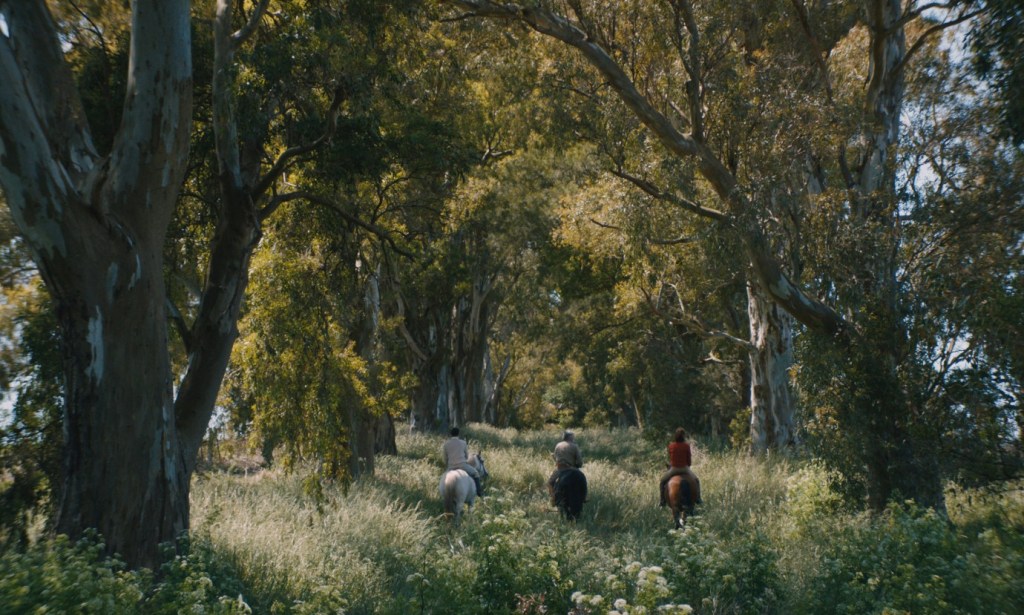
Day two began with another, yet very different kind of slow burn in Azor. Set in Argentina in the 80s Azor examines the mundane everyday actions that ultimately lead to dictatorships being able to flourish. Azor follows Swiss private banker Ivan (Fabrizio Rongione) as he goes from meeting to meeting chasing after the work of his partner who has mysteriously disappeared and who’s absence is felt at every turn. Azor keeps its intentions and plot close to the vest, revealing its politics slowly and subtly as it goes along. It’s an admiral feat to pull off especially for a first time director in Andreas Fontana. Subtlety in film is hard especially when it comes to politics, which makes the Fontana’s patience and pacing all the more interesting. It helps that the film is also gorgeously shot using all of its extravagant settings to its advantage. It’s perhaps not the easiest of watches, and is sometimes a little too patterned even for a film about the mundane but by the time the film makes its final point Azor feels wholly satisfying in a unique and admiral way.
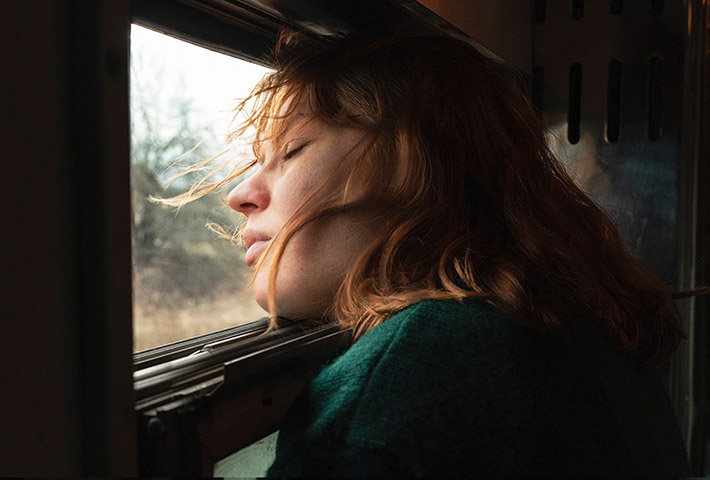
After two very slow films in a row the final film of my second day of VIFF, Compartment No. 6, felt like a real sweet treat. The film is essentially a play between two characters Laura (Seidi Haarla), a young archeology student on her way alone to the arctic circle, and Vadim (Yuriy Borisov), a young working class Russian, as they find themselves stuck on a long train north together. The film plays upon usual kinds of tropes, two young people bonding because of close proximity, but through the charming nature of its leads and because of the empathy the film has for the both of them it all works tremendously. Compartment No. 6 is a sweet and charming ride and while its not a film that might stick with me through the end of the festival it’s one that I must admit was the change of pace I needed after the two slow and challenging films that opened my festival.
That’s it for today! Unless something catches my eye in the afternoon the next time you will hear from me will be Monday morning with thoughts on Wife of Spy, The Worst Person in the world, and my return to the best place to watch a movie in Vancouver… The Vancouver Playhouse!
 The Vancouver Subscription Scene